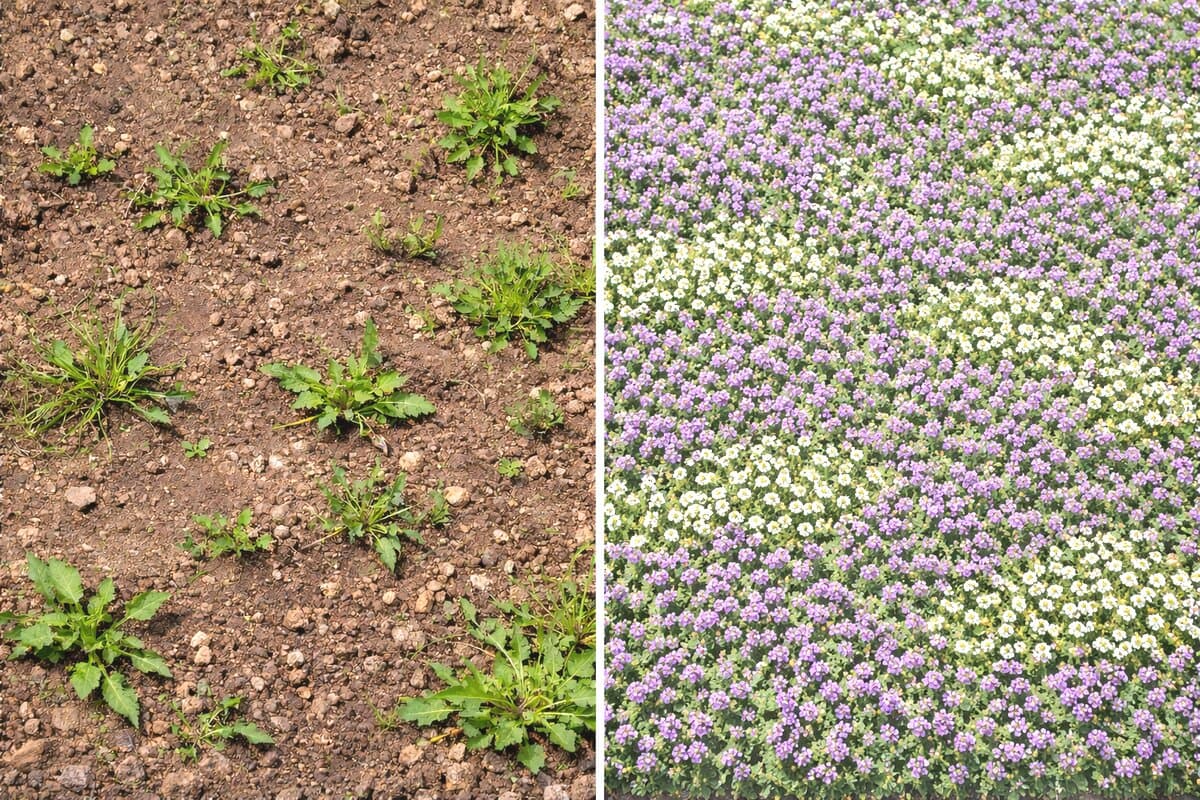
The idea that plants communicate and help each other sounds like something from a children's book. It's actually a well-documented area of plant biology. Plants release chemical compounds through their roots and leaves that affect everything around them: nearby insects, soil microbes, and other plants. Some of these interactions are genuinely cooperative. Others are competitive. Companion planting is the practice of using these interactions deliberately.
Not all companion planting claims hold up. Some are folklore, some are confirmation bias, and a few are outright myth. What follows is the combinations with actual mechanistic explanations and, where available, trial data behind them.
What's actually happening underground
Plants don't just compete for water and nutrients. They actively release compounds into the soil that affect their neighbors. This process is called allelopathy, and it works in both directions: plants can suppress competitors by releasing growth-inhibiting chemicals, and they can attract beneficial organisms that protect neighboring plants.
Legumes (beans, peas, clover) do something even more specific: they form symbiotic relationships with bacteria called Rhizobium that live in nodules on their roots. These bacteria pull nitrogen from the air and convert it into a form plants can use. When a legume dies or its roots decay, that fixed nitrogen stays in the soil and feeds neighboring plants. This is not a metaphor. It's a measurable soil chemistry benefit.
Indigenous farmers knew this 1,000 years before plant scientists explained why.
The Three Sisters: the most elegant system in farming history
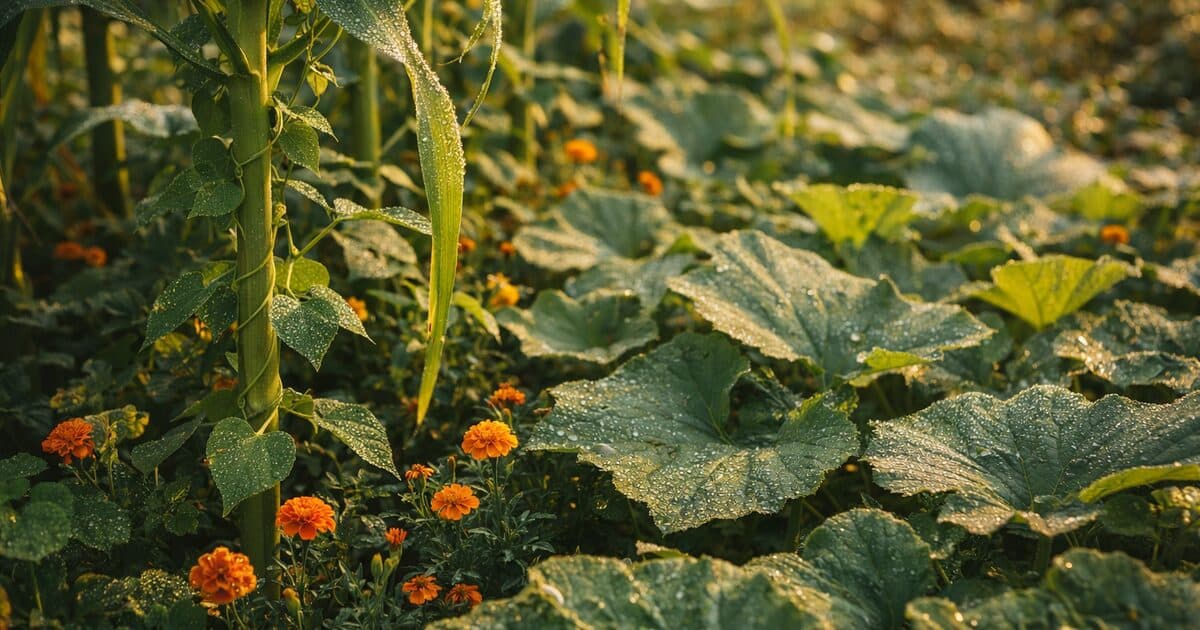
The Three Sisters planting method originated with Indigenous farmers across North America, particularly among the Haudenosaunee (Iroquois) Confederacy, where it formed the agricultural foundation of entire communities for centuries. The system is elegant because each of the three plants solves a problem the other two have.
Corn
The structure
Grows tall first, providing a living trellis for bean vines. Corn is a heavy nitrogen feeder, which the beans will supply.
Beans
The fixer
Pole beans climb the corn stalk and fix atmospheric nitrogen into the soil through their root nodules, feeding both the corn and squash.
Squash
The mulch
Squash's large leaves spread across the ground, shading out weeds, holding soil moisture, and keeping the soil cool during hot summer months.
How to plant it: In a mound of soil about 12 inches high and 18 inches across, plant 3 to 4 corn seeds in the center. Once the corn is 6 inches tall (about 2 weeks), plant 4 to 6 bean seeds around it in a circle. One week after that, plant 3 to 4 squash seeds around the outer edge. The staggered timing is important: each plant needs to establish before the next one is introduced.
Companion pairs that actually work
Beyond the Three Sisters, a handful of companion plant pairings have consistent support from both research and widespread grower experience. Some are well-documented in horticultural literature. Others have been confirmed by gardeners comparing adjacent beds over multiple seasons.
COMPANION PLANT PAIRS: FRIENDS AND FOES
Basil repels aphids, thrips, and hornworm moths. Many gardeners report improved tomato flavor.
Garlic sulfur compounds deter aphids and black spot fungus. Classic cottage garden pairing.
Chive scent masks carrot smell from carrot flies. Alternating rows reduce pest pressure significantly.
Mexican marigolds exude a root compound that repels nematodes for up to a full season after removal.
Fennel releases allelopathic chemicals that stunt tomato root growth. Keep it far from the vegetable garden.
Alliums inhibit the nitrogen-fixing bacteria that legumes depend on. Planting them together reduces bean yield.
Start with marigolds. They're almost impossible to get wrong.
If you take one thing from this guide, plant marigolds around your vegetable bed. French marigolds specifically, not the giant African types. They release thiophene compounds from their roots that are toxic to root-knot nematodes, microscopic worms that attack vegetable roots and cause serious yield loss in warm-climate gardens.
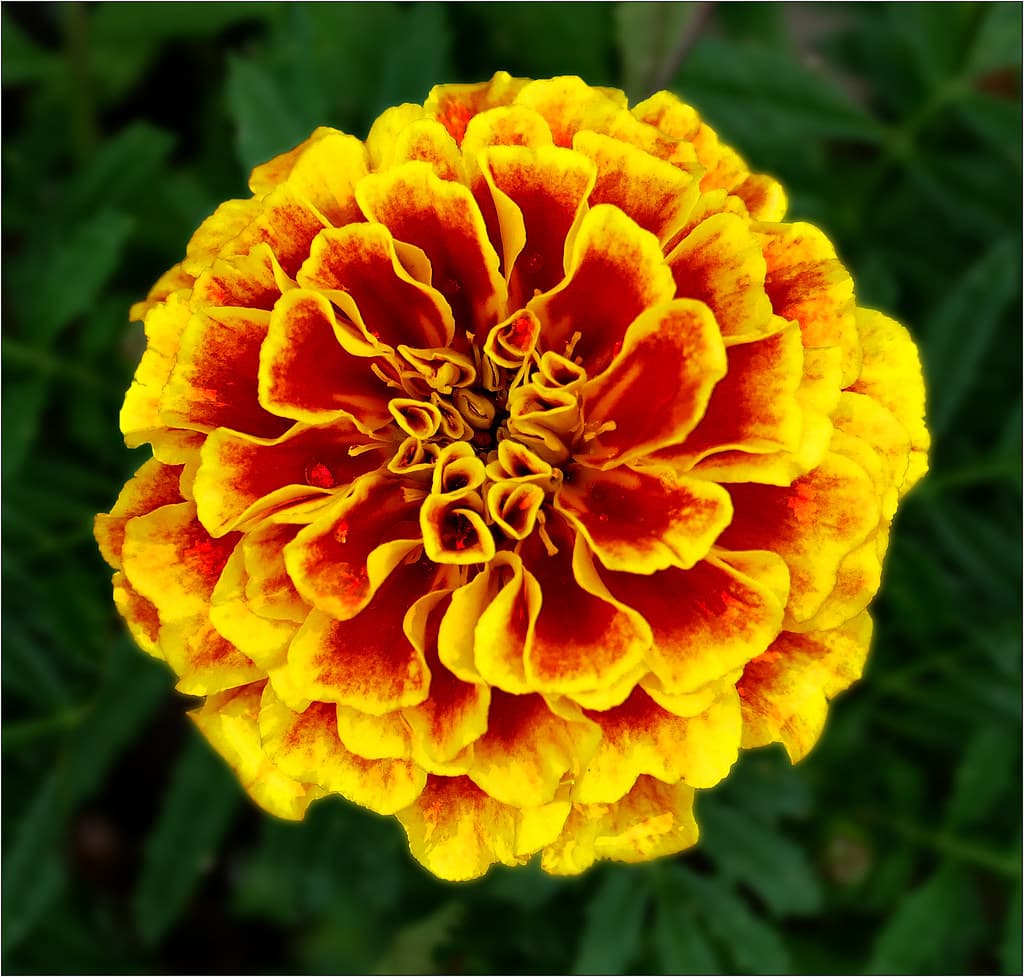
But that's just the start. Marigold flowers attract ladybugs, which eat aphids. Their scent confuses whiteflies and thrips, which navigate partly by smell. And they bloom for months on end with almost no care, which means you get pest suppression and a beautiful garden as a package deal.
Plant them at every corner of your raised bed, between rows of tomatoes and peppers, and along any fence line adjacent to your garden. They're an annual, so they need to be replanted each year — but they self-seed prolifically if you let a few flowers go to seed in fall.
One season of French marigolds reduces soil nematode pressure for the entire following season, even after the plants are removed.
Plants that genuinely fight each other
Just as some plants help their neighbors, others actively suppress them. Fennel is the most notorious offender in the vegetable garden: it exudes chemicals from its roots and leaves that stunt the growth of tomatoes, peppers, and most brassicas. Keep it well away from any vegetable bed, ideally in a container or isolated bed of its own.
Onions and garlic (alliums as a group) are excellent pest deterrents but should not be planted near beans or peas. Allium sulfur compounds inhibit the Rhizobium bacteria that legumes depend on for nitrogen fixation, reducing bean and pea yields noticeably.
And while tomatoes and peppers are both nightshades that share similar growing requirements, avoid planting them in the same bed as brassicas (broccoli, cabbage, kale) long-term. They compete for the same soil nutrients and build up shared soil pathogens when grown in the same spot year after year. This is the principle behind crop rotation, which deserves its own guide.
Quick companion reference
| Plant | Likes 👍 | Dislikes 👎 |
|---|---|---|
| Tomatoes | Basil, marigolds, carrots, parsley | Fennel, brassicas, potatoes |
| Peppers | Basil, marigolds, spinach | Fennel, apricot trees |
| Beans | Corn, squash, marigolds, carrots | Onions, garlic, leeks, fennel |
| Carrots | Rosemary, chives, leeks, tomatoes | Dill, anise |
| Lettuce | Chervil, radishes, strawberries, tall plants for shade | Celery, parsley (compete) |
| Roses | Garlic, chives, lavender, parsley | Fennel, boxwood nearby |
| Squash | Beans, corn, marigolds, nasturtiums | Potatoes, fennel |
Getting started: the 20-minute companion planting plan
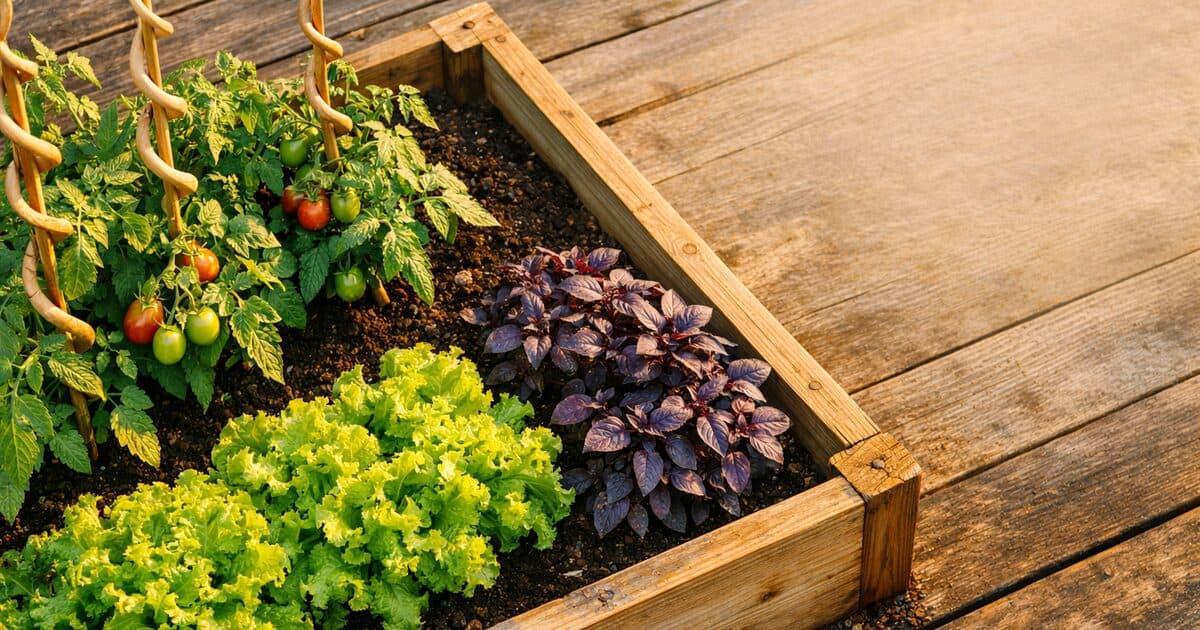
You don't need to redesign your entire garden. Start with two changes: plant marigolds around whatever you're already growing, and put basil next to your tomatoes. These two pairings alone give you meaningful pest pressure reduction with zero additional effort or cost.
In year two, try a Three Sisters mound if you have space. In year three, start tracking which beds have fewer aphids, which tomatoes set more fruit, which lettuce holds up longer in summer heat. Companion planting rewards observation over time. The gardeners who swear by it are usually the ones who've been paying attention to the same beds for three or more seasons.
Plant French marigolds at every corner and between rows this weekend
Add basil starts near every tomato plant when you transplant
Keep a note of which plants are near which, and where pest pressure is lowest
Try a Three Sisters mound next season in a 5×5 foot space
Remove all fennel from your vegetable area or plant it in a dedicated isolated bed