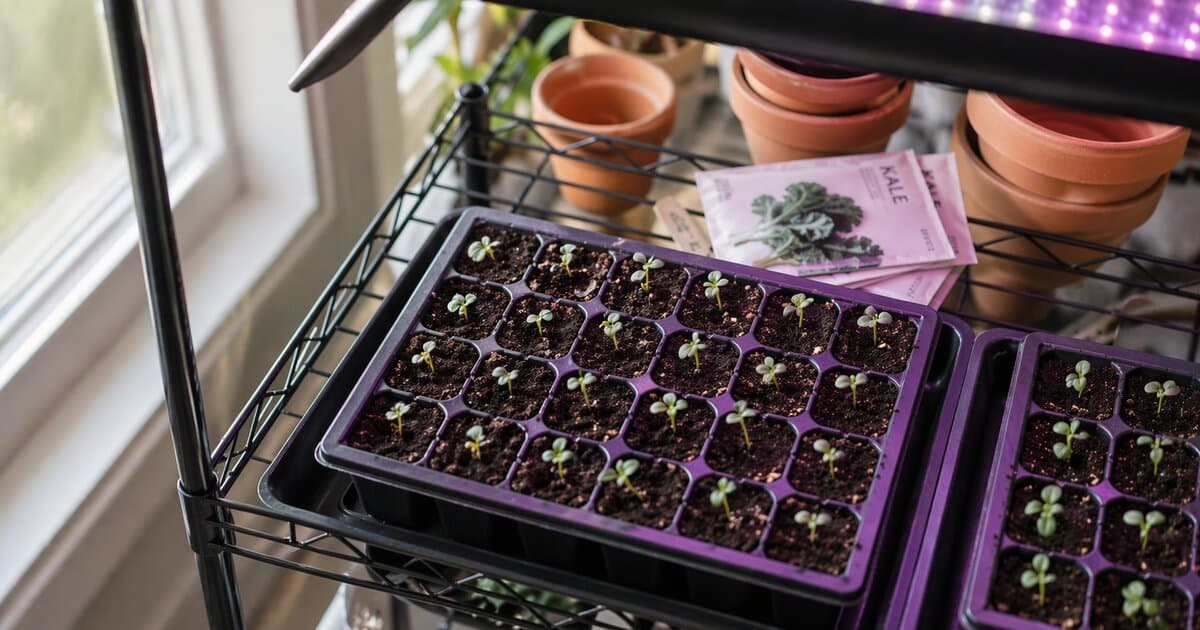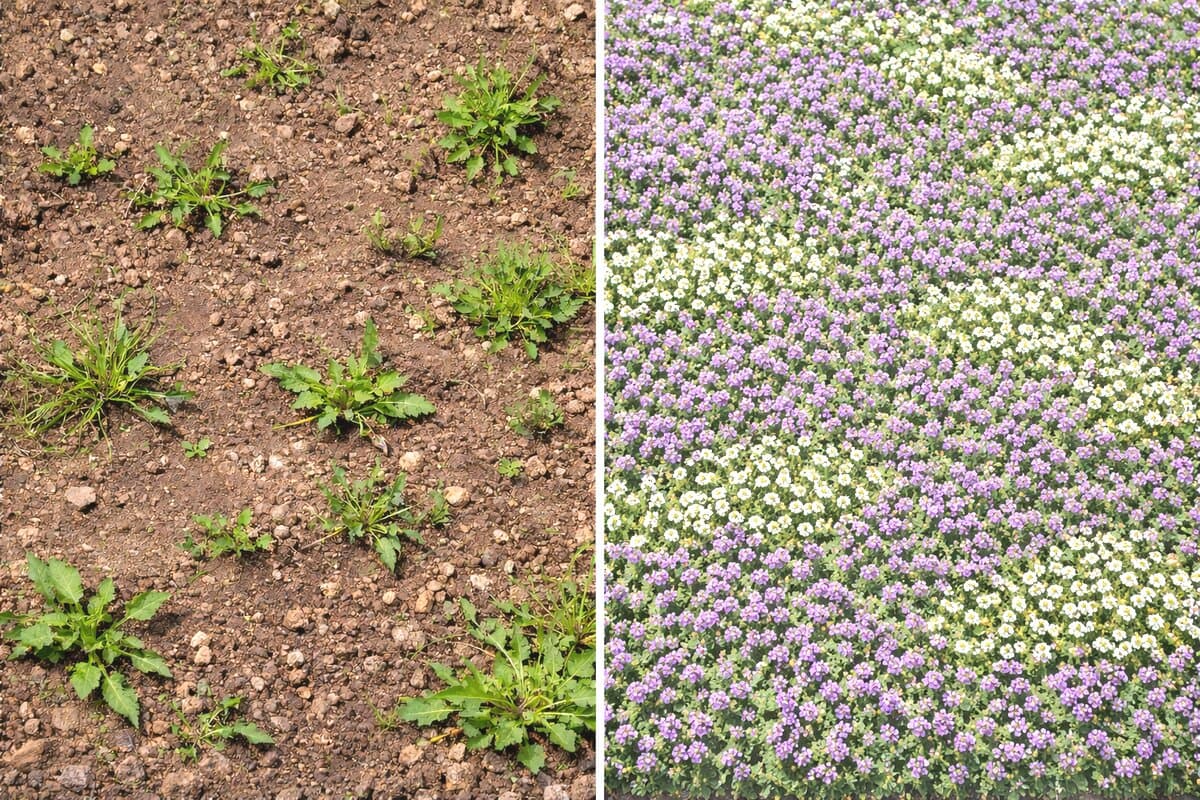
Weeds don't appear randomly. They show up wherever bare soil gets sunlight, which is basically everywhere you're not already growing something. Most garden soil holds 150 to 200 viable weed seeds per square foot in the top two inches alone. Every time you cultivate, you bring a fresh batch to the surface. A single dandelion produces up to 15,000 seeds per year.
Mulch helps. But mulch breaks down, needs replacing, and doesn't fix the root problem. The most durable solution is plants that close off the light, the surface moisture, and the open space that weeds need to germinate. They do the work all season, year after year, and most of them look better than bare mulch.
The seed bank under your feet
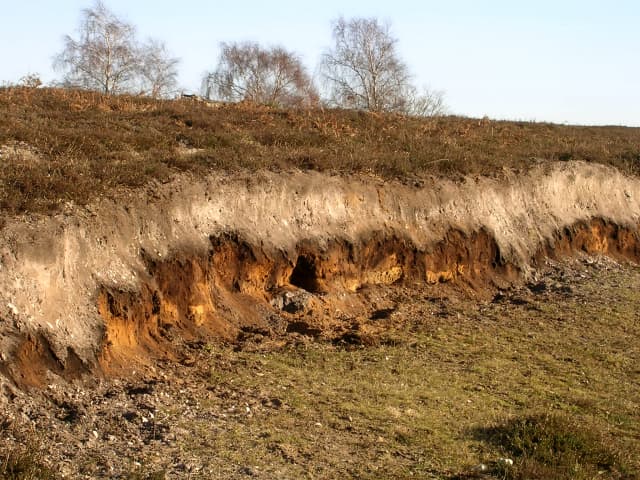
Most weed seeds won't germinate in the dark. They've evolved a light-sensing mechanism (phytochrome) that tells them whether they're near the surface where growth is possible. A seed that germinates three inches down will exhaust its energy reserves before reaching light and die. So weed seeds in deep soil stay dormant indefinitely. Some remain viable for 40 years or more.
The problem is that every time you dig, rake, or till, you pull dormant seeds up into the germination zone. This is why a freshly dug bed fills with weeds so fast. You didn't create new weed seeds. You just promoted the ones already there.
Ground cover plants block the light signal that wakes those seeds up. Dense foliage also occupies the surface moisture that newly germinated seedlings need in their first 48 hours, before roots reach deeper water. Cut off both triggers and most weed pressure disappears.
Three ways ground cover shuts weeds out
Canopy closure is the main mechanism. Once ground cover fills in, very little light reaches the soil surface. Weed seeds don't get the germination signal. The ones that do germinate in early spring, before the canopy closes, are easy to pull because the cover hasn't established yet.
Root competition is the second one. Ground cover plants develop dense, shallow root systems that occupy exactly the zone where weed seedlings need to establish. A new weed sprout trying to set roots in a mat of creeping thyme finds almost no purchase.
The third mechanism is time: the effect compounds. First year, the cover is patchy and needs attention. Second year, coverage is 70 to 80 percent and weeds are sporadic. Third year, you're mostly pulling isolated strays from the edges. The ground itself becomes inhospitable to weeds, without any additional work from you.
- 150+
- weed seeds per sq ftIn the top 2 inches of typical garden soil
- 90%
- germination reductionWith dense perennial ground cover at full establishment
- 40 yrs
- seed viabilitySome weed seeds remain viable for decades in undisturbed soil
- ~2 seasons
- to full coverFor most perennials planted at correct spacing
Eight plants worth growing
These are plants that actually close off bare soil rather than just coexisting with it. Each one has a clear mechanism: dense foliage, aggressive root spread, fast reseeding, or a combination of the three. They're ordered by how easy they are to establish.
GROUND COVER AT A GLANCE
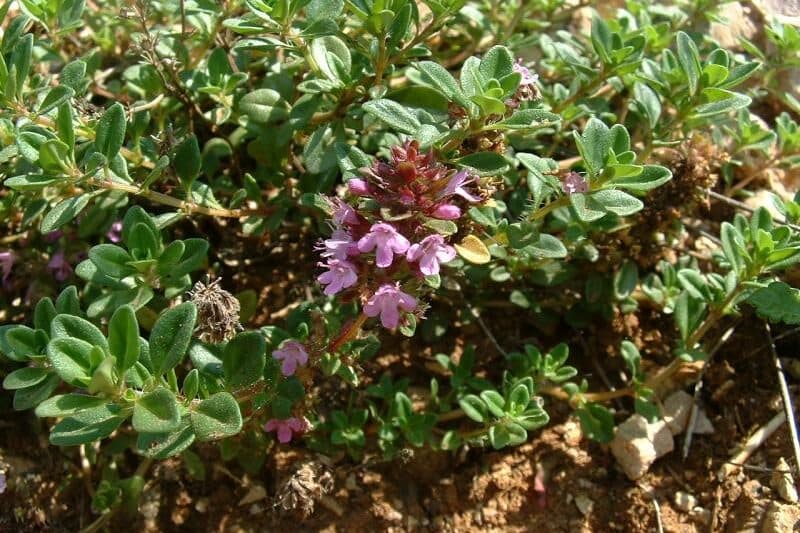
Creeping Thyme
SPREAD
12–24"
HEIGHT
2–3"
SUN
Full sun
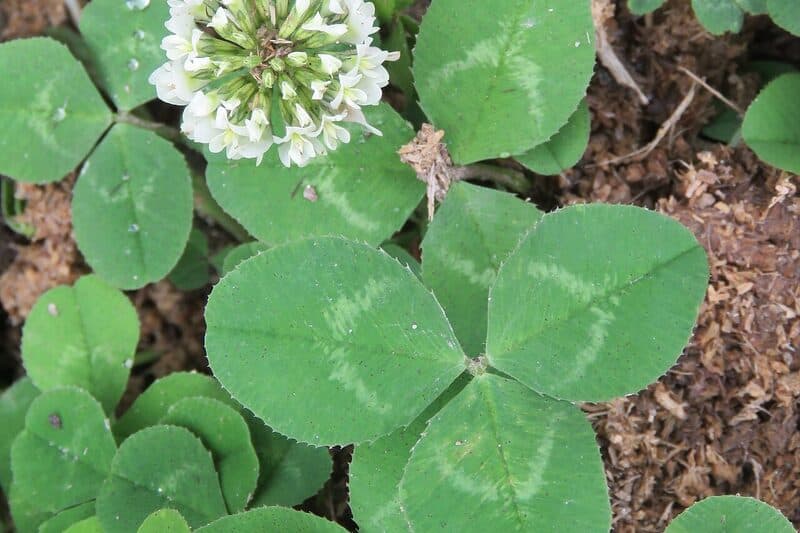
White Clover
SPREAD
18"
HEIGHT
4–6"
SUN
Sun / part shade
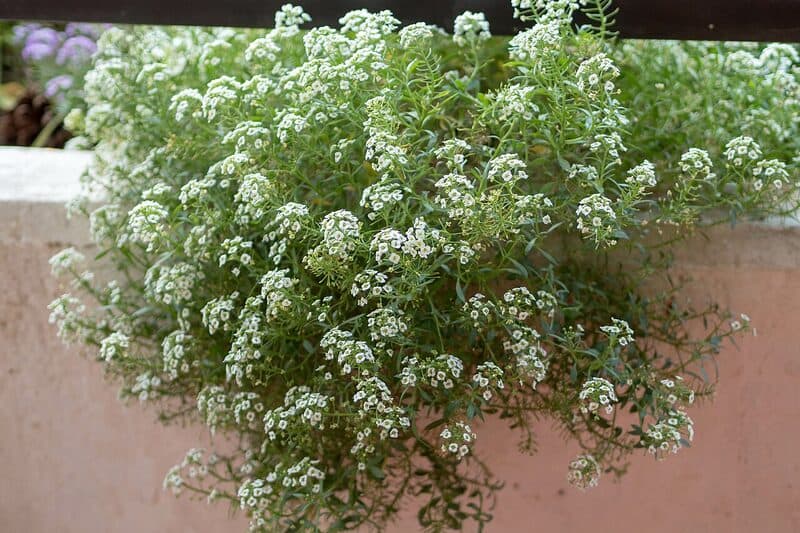
Sweet Alyssum
SPREAD
9–12"
HEIGHT
4–6"
SUN
Full / part sun
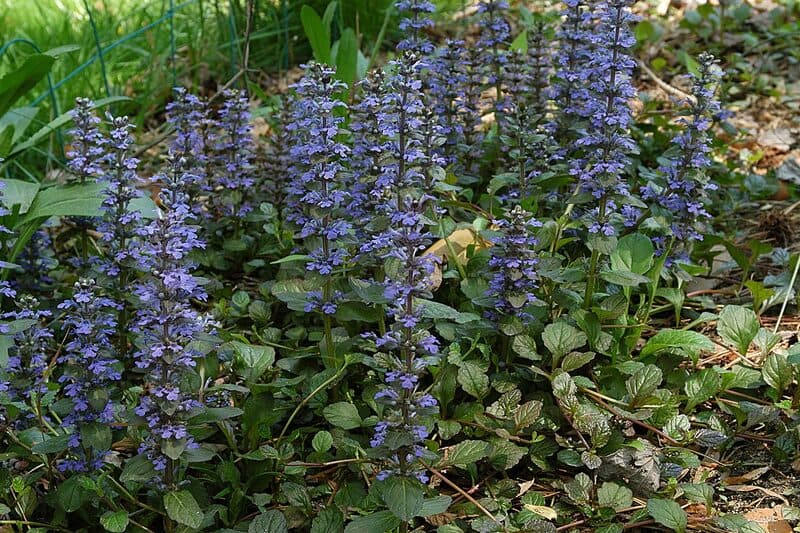
Ajuga
SPREAD
12–18"
HEIGHT
4–6"
SUN
Part to full shade
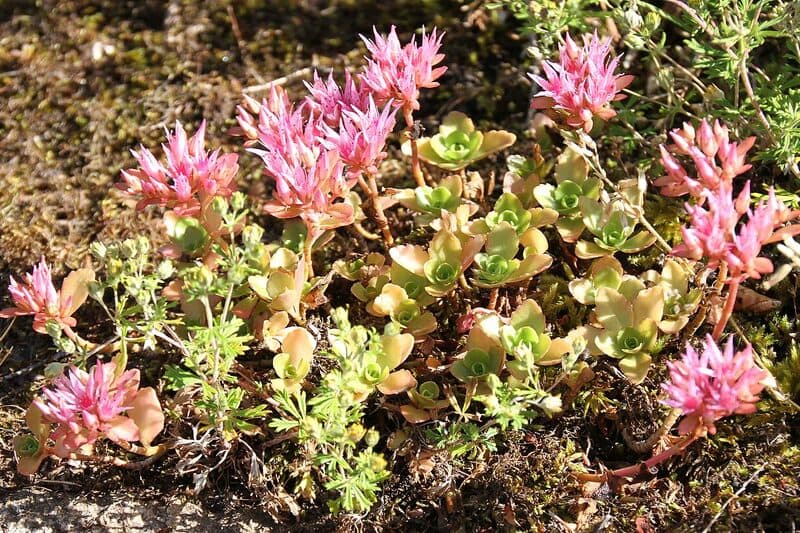
Sedum 'Dragon's Blood'
SPREAD
18"
HEIGHT
4"
SUN
Full sun
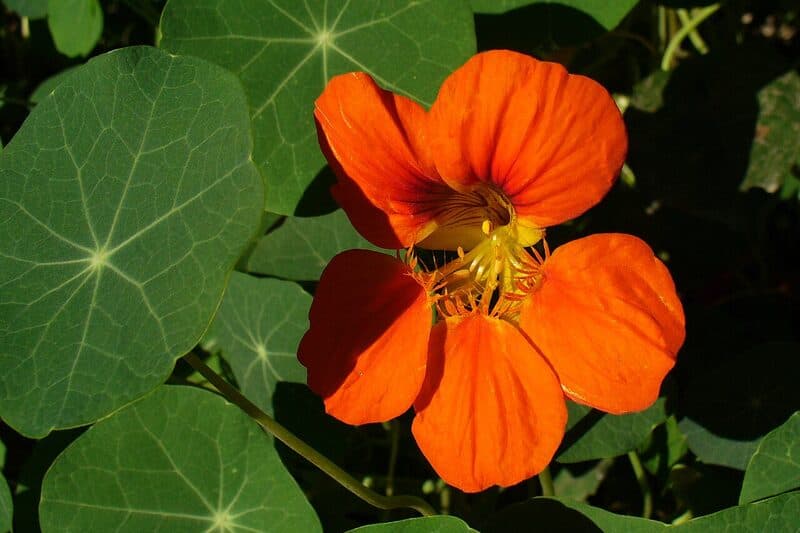
Nasturtiums
SPREAD
12–18"
HEIGHT
12"
SUN
Full / part sun
1. Creeping thyme (Thymus serpyllum)
The best all-around choice for sun beds. Spreads to 24 inches wide, stays under 3 inches tall, handles foot traffic, and releases fragrance when stepped on. Established plants are almost entirely maintenance-free. The flowers attract pollinators for six weeks in summer, which is a bonus.
Where it struggles: dense shade and soggy soil. Plant in full sun with decent drainage and it's hard to kill. Start with transplants rather than seed for faster coverage, and space them 9 to 12 inches apart.
2. White clover (Trifolium repens)
Clover fixes nitrogen, spreads aggressively, tolerates mowing, and costs almost nothing to seed. Broadcast at about one pound per 1,000 square feet and it establishes in two weeks. By mid-summer it's a solid mat.
The catch: it looks informal. Clover works beautifully as a lawn substitute or in a kitchen garden path, but it's not a good fit for a formal ornamental bed. Also, it attracts bees. That's ecologically useful and worth knowing before you plant it where small children play barefoot.
3. Sweet alyssum (Lobularia maritima)
An annual that reseeds reliably, which means you plant it once and it comes back on its own most years. Tiny white or purple flowers bloom from spring through frost, forming a low honey-scented carpet that crowds out weeds and attracts parasitic wasps that prey on aphids and caterpillars. A genuinely useful plant in the vegetable garden.
Because it's an annual, it doesn't suppress early spring weeds the way perennials do. Pair it with a perennial ground cover for year-round coverage.
4. Ajuga / bugleweed (Ajuga reptans)
The go-to for shady spots where most ground covers fail. Ajuga spreads by runners, forming a dense mat of textured foliage in shades of purple, bronze, or green depending on the variety. It produces short spikes of blue-purple flowers in spring that bees love.
In full sun it can struggle in hot climates. In partial to full shade it spreads reliably, about 12 to 18 inches per plant per year. Give it room to expand or it will move into lawn edges, which some gardeners find useful and others find annoying.
5. Sedum 'Dragon's Blood' (Sedum spurium)
A low succulent that thrives in dry, rocky, or poor-soil situations where other ground covers fail. The foliage turns deep red in fall and holds its structure through winter, giving year-round coverage. Spreads to 18 inches and stays flat at 4 inches tall.
Best for steep slopes, rock gardens, and any bed where drainage is excellent but regular watering isn't going to happen. Don't plant it in rich, consistently moist soil: it'll rot.
6. Nasturtiums (Tropaeolum majus)
Fast, edible, and showy. Direct-sow nasturtium seeds in early spring and within six weeks you have sprawling plants covering 12 to 18 inches of bare soil per plant. The flowers, leaves, and seed pods are all edible with a peppery flavor. They also trap aphids, drawing them away from vegetables.
As an annual they won't suppress early-season weeds, and they'll die back in fall, leaving the bed open again. Use them as a seasonal cover while perennial ground covers establish in their first year.
7. Lamb's ear (Stachys byzantina)
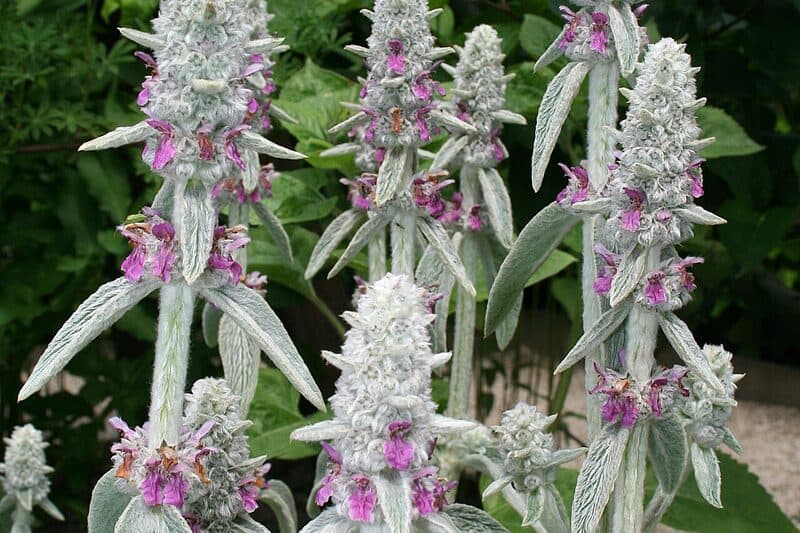
Silver, densely felted foliage that spreads 18 to 24 inches wide and forms a thick mat that blocks light completely. It's one of the most visually striking ground covers available and works well as a border edging or between shrubs. Drought-tolerant once established.
In humid climates it can rot in the center during wet summers. Cut it back to fresh growth if that happens. Otherwise it needs almost nothing: no fertilizing, minimal water, and it spreads steadily year after year.
8. Creeping Jenny (Lysimachia nummularia)
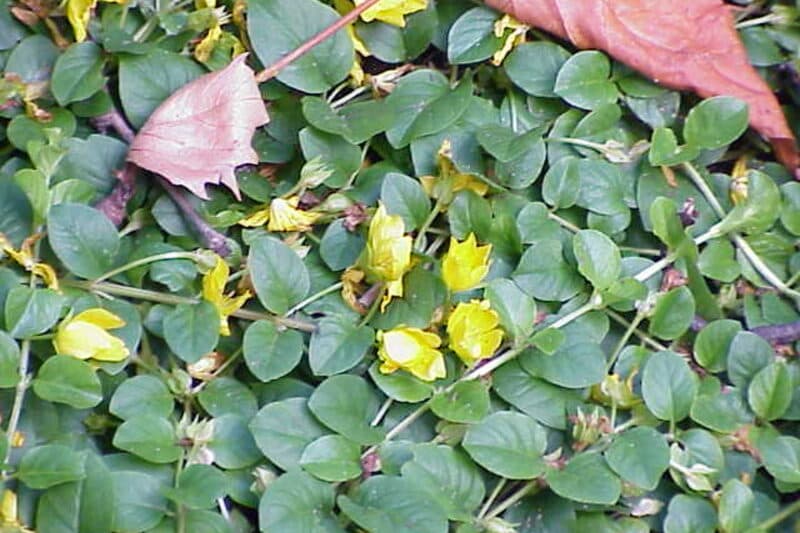
For moist, shady spots that nothing else seems to fill. Bright chartreuse or golden foliage spreads aggressively along the ground, rooting at every node. It forms a 2-inch-high mat that threads through other plants without climbing them. In boggy areas or near water features it's the most reliable cover option available.
Be aware that it can spread beyond where you want it. In ideal conditions it spreads fast enough to become a nuisance if you're not editing the edges every spring.
The spacing formula most gardeners get wrong
The single most common mistake is spacing too generously. The spacing on plant tags is usually for aesthetics, not suppression. Those instructions assume you want to see mulch between plants. For weed suppression, you want the plants to touch.
For any perennial ground cover, divide the mature spread in half and use that as your planting distance. A plant that spreads to 18 inches wide gets planted every 9 inches. It'll look dense the first summer. By the second spring it'll be solid coverage, with zero open soil showing.
An even better approach is triangle spacing instead of grid rows. With grid planting, the corners between four plants leave persistent gaps. With triangle planting, each plant's coverage overlaps those corners. It fits about 15 percent more plants per square foot at the same spacing distance, which translates directly to faster coverage.
Shade beds are a different problem
Most sun-loving ground covers fail entirely in deep shade. If you plant creeping thyme under a tree canopy, it'll thin out and die within a season. Shade beds need plants adapted to low light, and fortunately several are excellent weed suppressors.
SHADE-TOLERANT GROUND COVERS
Ajuga
Dense mat, runners spread fast
Creeping Jenny
Moist spots, roots at every node
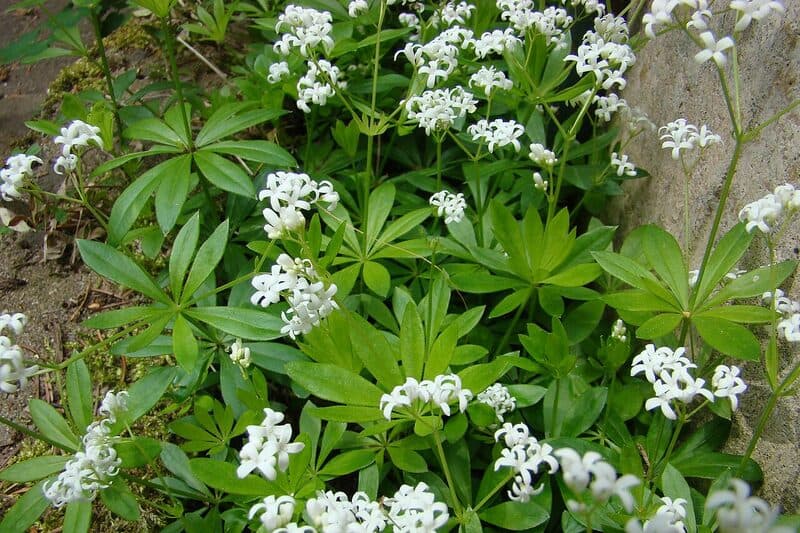
Sweet Woodruff
Star flowers, spreads by runners
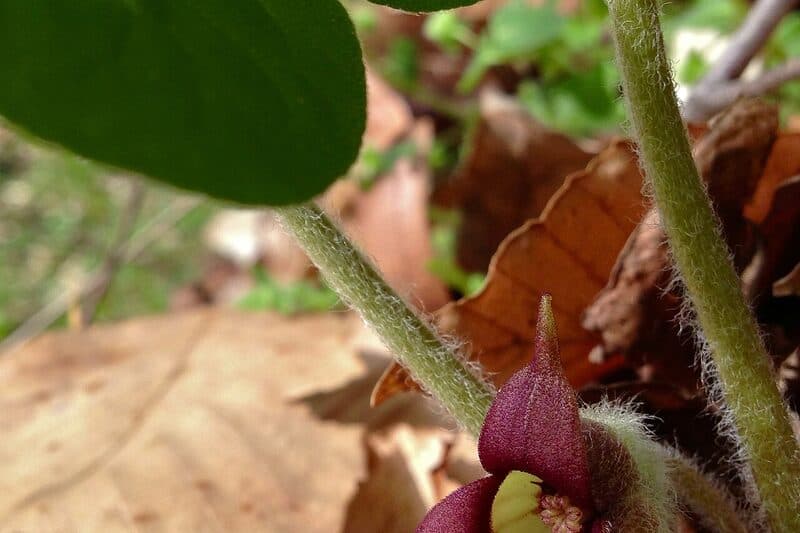
Wild Ginger
Slow but eventually impenetrable
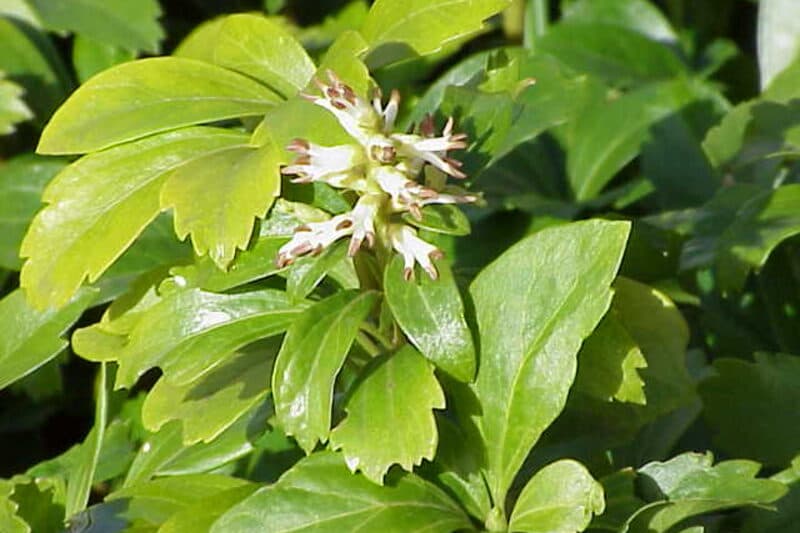
Pachysandra
Evergreen under dense canopy
Shade-tolerant
Under trees and in north-facing beds
- Ajuga (bugleweed) — dense mat, runners spread fast
- Creeping Jenny — for moist spots, roots at every node
- Sweet woodruff (Galium odoratum) — star-shaped flowers, spreads by runners
- Wild ginger (Asarum canadense) — slow but eventually impenetrable
- Pachysandra — evergreen, thrives under dense tree canopy
Sun-required
Need 6+ hours direct sun daily
- Creeping thyme — will not persist in shade
- Sedum — needs full sun to stay compact
- Lamb's ear — stretches and flops without sun
- Nasturtiums — need sun for flowering and coverage
- White clover — tolerates part shade but thins in deep shade
The slow-spreaders in the shade list (particularly wild ginger and pachysandra) need a full three seasons to achieve meaningful coverage. Plant nasturtiums or sweet alyssum as temporary fillers in year one while the perennials establish.
The ground under a mature tree is some of the hardest soil to keep weed-free. It's also the place where weed cloth fails fastest, because tree roots push through it within a few years.
What the first season actually looks like
The first year with ground cover is often more work than the year before, not less. Perennials spend most of their first season building root systems rather than spreading. Coverage is patchy. Weeds exploit every gap. This is normal and it's temporary.
The practical fix for year one: mulch between the plants. Two to three inches of wood chip mulch in the gaps fills the space while your ground cover establishes. It breaks down over time and improves the soil, and by year two your cover plants will have spread into most of it.
WEEKLY WEEDING TIME AS GROUND COVER MATURES
YEAR 1
Establishment
85% of original
patchy cover, still weeding
YEAR 2
Spreading
45% of original
70% coverage, weeds sporadic
YEAR 3
Mature
10% of original
solid cover, edge maintenance only
What you should not do in year one is pull every weed you see by digging. Hand-pull weeds at ground level rather than disturbing the soil, which brings up another round of dormant seeds. If a weed is small, pinch the stem at soil level. Save the digging for persistent tap-rooted weeds like dock or dandelion, and do it carefully.
Quick reference by garden type
| Garden type | Best choices | Avoid |
|---|---|---|
| Sunny vegetable bed | | Aggressive spreaders that compete with crops |
| Formal ornamental border | | White clover, creeping Jenny (too informal) |
| Under trees / deep shade | | Creeping thyme, sedum, nasturtiums (need sun) |
| Slope or erosion control | | Shallow-rooted annuals (won't hold soil) |
| Dry or rocky bed | | White clover, creeping Jenny (need moisture) |
| Near water / bog area | | Sedum, creeping thyme (will rot in wet soil) |
| Between stepping stones | | Lamb's ear, ajuga (too tall, can't be walked on) |
Getting started: what to do this weekend
You don't need to replant your whole garden. Start with one bed that's giving you the most weeding grief. Get that one bed covered in the next few weeks, see how it looks and feels by fall, and expand from there next spring.
The plants that pay off fastest in year one are annual reseeders: sweet alyssum and nasturtiums. Plant them now. While they're growing, order the perennials that will take over permanently in year two.
Pick one bed. Identify sun exposure (full sun, part shade, or deep shade) — this determines your plant list.
For immediate coverage this season, broadcast sweet alyssum seed across the entire bed surface after your last frost date.
Order creeping thyme, ajuga, or sedum transplants based on your sun situation. Plan to plant them at half the spacing shown on the tag.
Mulch between transplants with 2 to 3 inches of wood chip mulch for the first season while plants establish.
Hand-pull weeds at soil level during the first spring gap, before your cover closes in. Don't dig. Pulling only.
Let sweet alyssum go to seed in fall. It will self-sow and fill gaps on its own the following spring.
By year two, assess coverage. Fill any persistent bare patches with more transplants spaced at 6 to 8 inches.