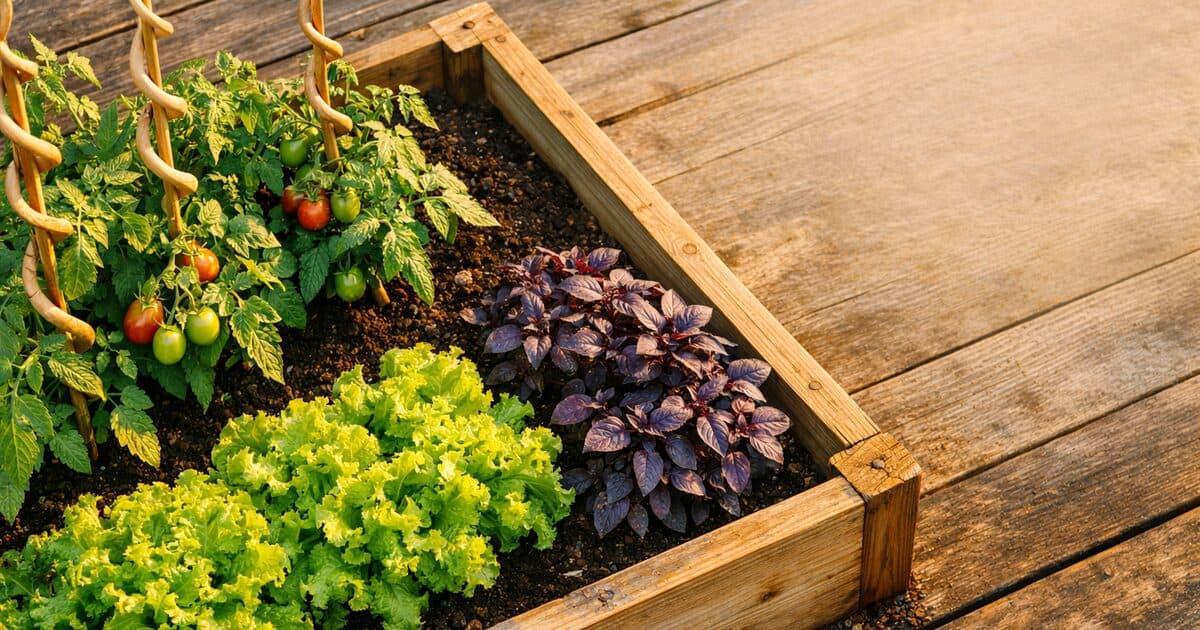
I grew my first tomatoes in a 5-gallon bucket on a Chicago fire escape in 2009. They outproduced my neighbor's in-ground plants by July — not because I was a better gardener, but because I controlled everything. The soil. The drainage. The light angle. In-ground gardeners spend years fighting their native conditions. I started with exactly what my tomatoes needed, in a space not much bigger than a doormat.
Containers hand you total control over the root environment, and that control is exactly what makes plants thrive. In-ground gardeners spend years fighting their native soil. You start with what your plants actually need. The tradeoffs are real, but smaller than you expect once you understand two things: container size and drainage.
- 2×
- More often than in-groundCheck soil daily in summer heat
- 5 gal
- Minimum for tomatoes10 gal for best yields
- 65°F+
- Root zone target tempDark pots overheat in full sun
- 2 wk
- Fertilizer intervalNutrients leach out with watering
Why containers work — and when they don't
In-ground gardeners inherit whatever the soil gods left behind. Heavy clay that drowns roots in spring. Compacted subsoil from decades of foot traffic. Sandy loam that drains before roots can drink. Fixing those problems takes years of amendment — if it's even possible. Container gardeners start with exactly the right mix on day one.
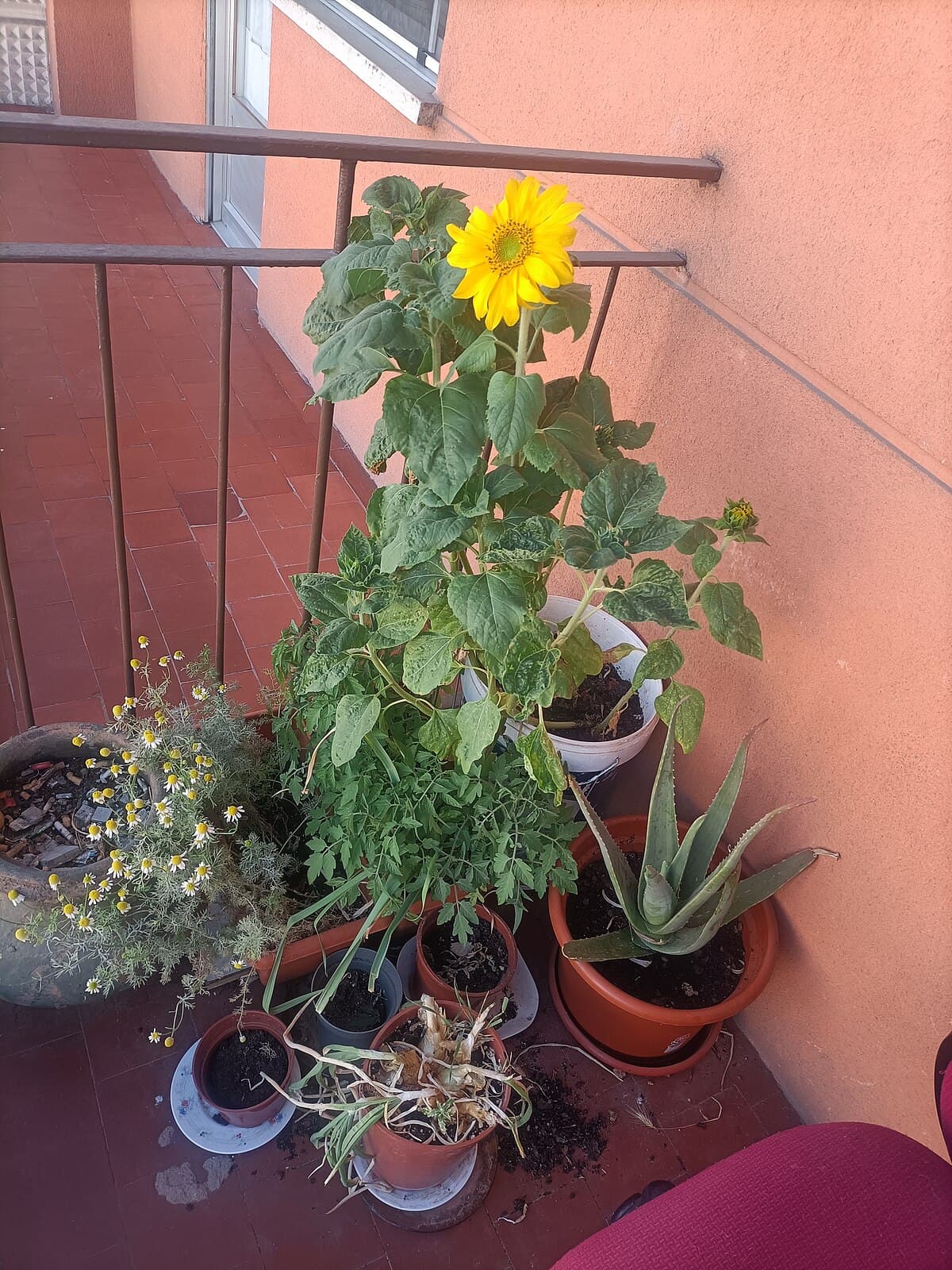
Containers also give you positioning power. Press tomatoes against a south-facing wall for reflected heat. Move tender seedlings inside when a late frost rolls in. Rotate pots to follow the sun across a narrow balcony as the season shifts. That kind of agility is valuable whether you're working with 100 square feet or 10,000.
Container size: bigger than you think
The most common container gardening mistake — by a wide margin — is going too small. A tomato in a 2-gallon pot is not a smaller version of a tomato in a 10-gallon pot. It's a stressed, root-bound plant that dries out in hours, produces a fraction of the yield, and needs near-constant fertilizing to survive. Size your containers to the plant, not to the space you wish you had.
CONTAINER SIZE GUIDE — ALL CONTAINERS TO SCALE
| Plant | Minimum size | Recommended | Notes |
|---|---|---|---|
| Herbs (basil, parsley) | 1 gal | 2–3 gal | Can mix several per pot |
| Lettuce / spinach | 2 gal | 4–6 gal | Deeper = more production |
| Peppers | 3 gal | 5 gal | Heat-lovers do well in dark pots |
| Eggplant | 5 gal | 7–10 gal | Needs consistent moisture |
| Tomatoes (det.) | 5 gal | 7 gal | Roma and Celebrity work well |
| Tomatoes (indet.) | 7 gal | 10–15 gal | Sungold thrives in 10 gal |
| Cucumbers | 5 gal | 10 gal | Need vertical support; thirsty |
| Zucchini | 10 gal | 15 gal | One plant per large pot |
Container materials: what actually matters
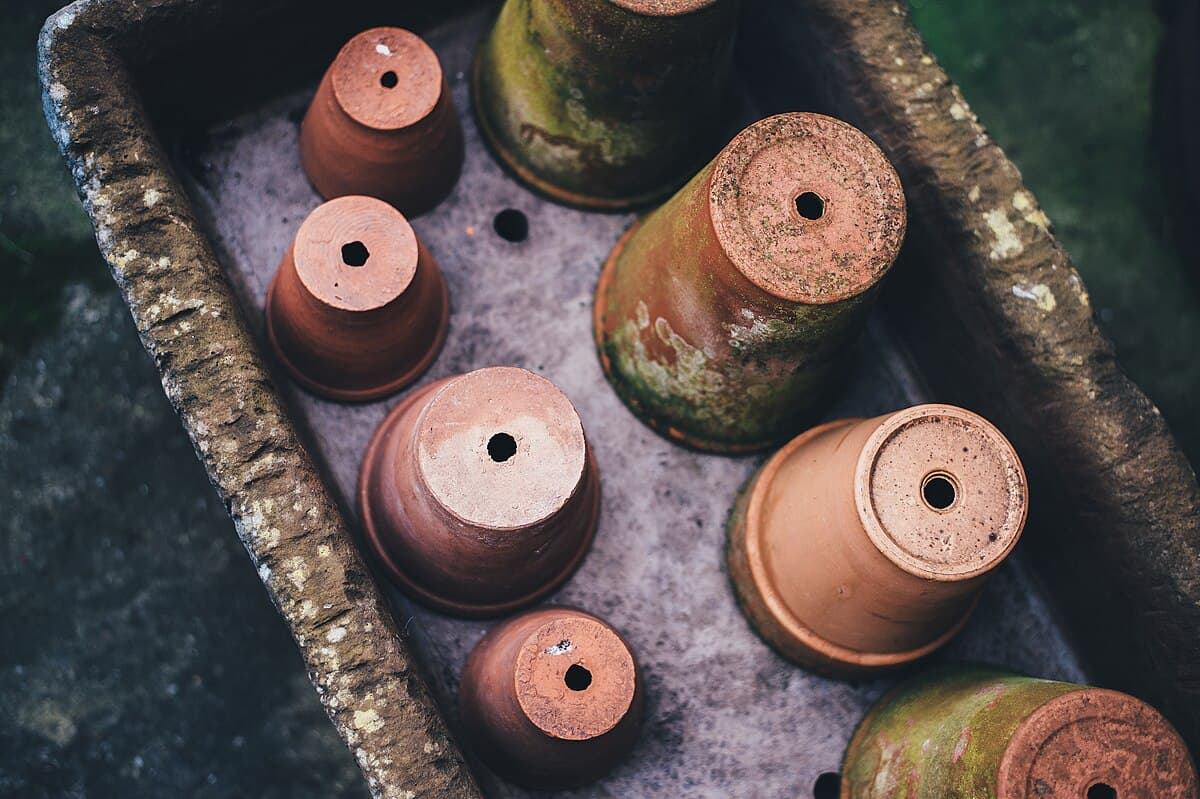
Terracotta
Classic, breathable, heavy
- Porous walls let roots breathe and moisture evaporate — plants rarely drown
- Dries out faster than plastic — daily watering in peak summer is non-negotiable
- Heavy when filled — not ideal for balconies with load-bearing limits
- Ages beautifully; the white mineral crust is normal and harmless
- Cracks in hard freeze/thaw cycles if left outside with wet soil
Fabric grow bags
Underrated, cheap, and excellent
- Air-prunes roots at the wall — prevents the circling that stunts plants in rigid pots
- Better drainage than any rigid container; nearly impossible to overwater
- Lightweight and foldable for off-season storage
- Use tan or light colors in hot climates — dark fabric bags overheat fast
- A 5-gallon fabric bag costs $3–6 and outperforms pots three times the price
Dark-colored pots in full sun can push 90–100°F at the root zone — hot enough to kill feeder roots and stall growth entirely. In climates that regularly top 90°F, use light-colored containers, wrap dark pots in reflective material, or double-pot them inside a larger container with an air gap between.
The drainage myth that's making your plants worse
Every gardening book published before 2000 recommends a layer of gravel or rocks at the bottom of containers to improve drainage. That advice is wrong — and the research showing it's wrong has been available for decades. Dr. Linda Chalker-Scott at Washington State University demonstrated that a gravel layer actually raises the perched water table, leaving the soil above it wetter, not drier. Your roots sit in a bath. Stop doing this.
Water doesn't flow from soil into gravel until the soil above it is completely saturated — capillary force holds water in soil against gravity until that tipping point. A gravel layer means the soil sits above a permanently wet zone, staying saturated longer after every rain or watering. The real fix for drainage problems is a quality potting mix with added perlite, and a drainage hole that is actually draining — not sitting in a saucer full of standing water.
Soil selection: never use garden soil
Garden soil in a container compacts into a dense, airless block within one season. Water beads off the surface instead of absorbing. Roots can't penetrate it. This isn't a theoretical risk — it happens reliably, every time, regardless of how good your in-ground soil is. The physics of a confined container are fundamentally different.
Use a quality potting mix, not "potting soil." That distinction matters more than most labels suggest. Real potting mixes are peat- or coco-coir-based with perlite or vermiculite — light, airy, and engineered for container drainage. Bags labeled "potting soil" often contain actual soil and compact in containers within weeks.
Watering containers: the daily check habit
Container plants need water more often than in-ground plants, and there's no workaround for this. There's no adjacent soil reservoir, no water table nearby, no capillary draw from surrounding earth. What's in the pot is the entire supply. When it's gone, it's gone — and plants will wilt within hours in summer heat.
Check soil moisture daily during the growing season. Push your finger 1–2 inches into the soil. Dry at that depth means water now. In full summer sun, that check will come back dry every single day for most fruiting plants. In partial shade or cool weather, you might get 2–3 days between waterings.
Water until it runs freely from the drainage holes, then stop. That flush pushes out fertilizer salt buildup and ensures the entire root zone gets moisture — not just the top two inches.
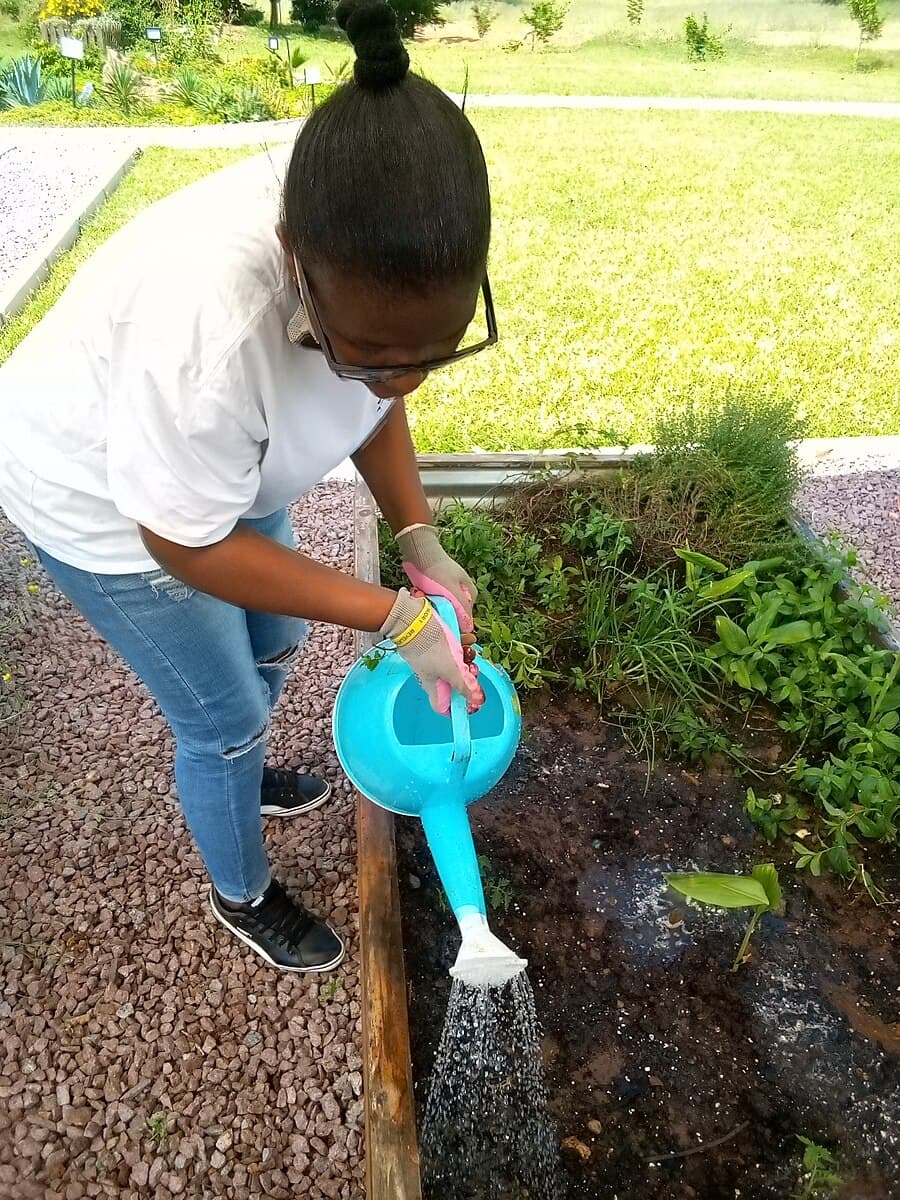
When you do water, water deeply — not a quick surface pass but a thorough soaking until runoff appears from the drainage holes. Shallow watering creates a shallow root system. Plants grow roots where moisture lives. In a pot watered only at the surface, that means the top 2 inches — the zone that dries out first and gets hottest in summer.
Fertilizing containers: more often than you expect
Every time you water, nutrients flow out through the drainage holes. This is inevitable — it's the same drainage you need to prevent root rot. The result is that container plants deplete their nutrient supply far faster than in-ground plants, which can draw from surrounding soil. What you added last month is partially gone.
Use a balanced liquid fertilizer every two weeks during the growing season. For fruiting plants like tomatoes and peppers, switch to a lower-nitrogen formula when you see the first flower buds — look for NPK values where the middle number (phosphorus) is higher than the first (nitrogen). Too much nitrogen at flowering pushes leafy growth at the expense of fruit set.
What actually thrives in containers
Not everything does well in pots. Plants with deep tap roots — carrots, parsnips, beets — need 18+ inches of depth that most containers don't offer. Large sprawling plants like full-size pumpkins and watermelons need horizontal space that no container can replicate. But a surprising range of food plants thrives in containers and genuinely prefers the controlled conditions you can provide.
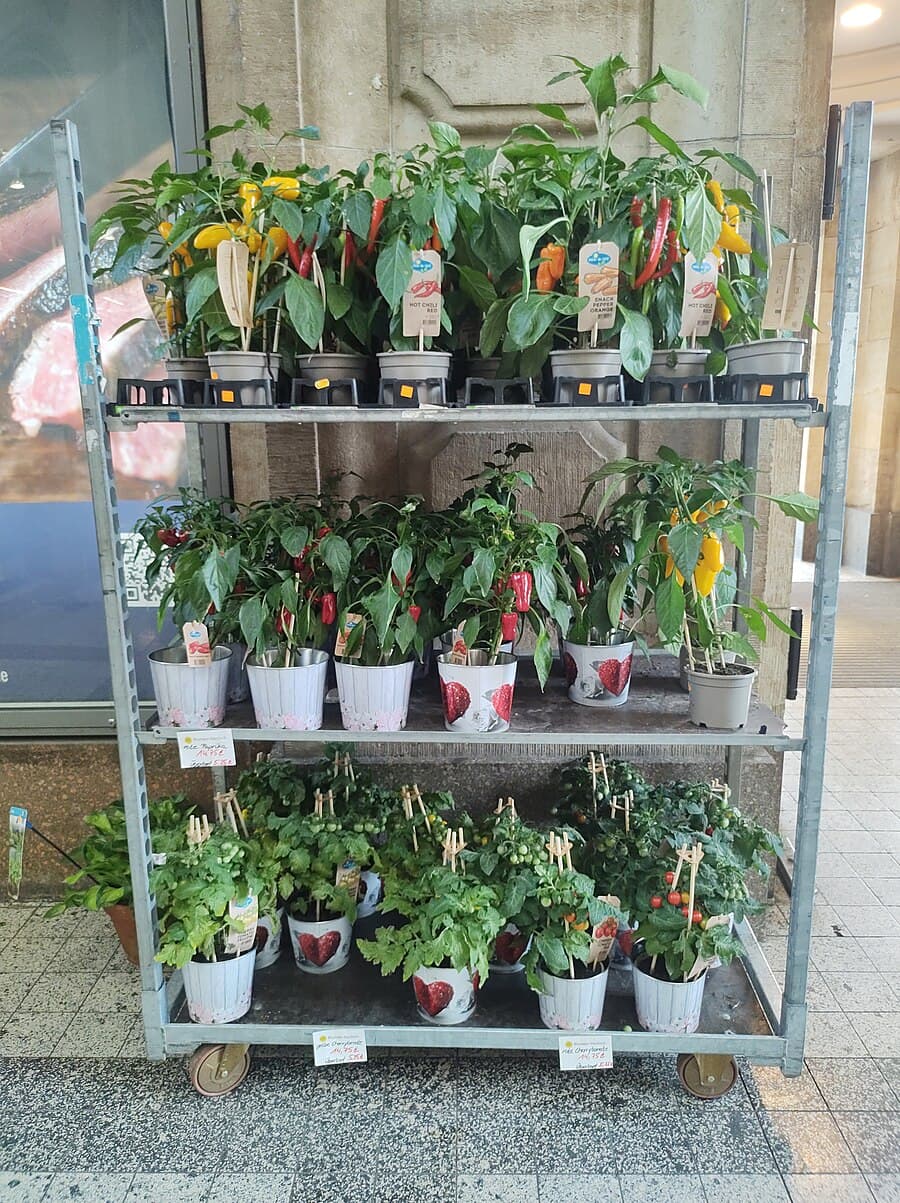
Excellent container crops
- Cherry tomatoes (Sungold, Sweet Million)
- All peppers — sweet and hot
- Basil, parsley, chives, mint
- Bush beans and peas
- Lettuce, arugula, spinach
- Eggplant (full-sized container)
- Strawberries
- Dwarf/patio cucumber varieties
Challenging or avoid
- Full-size pumpkins and winter squash
- Watermelons (except icebox varieties)
- Asparagus (needs permanent planting)
- Full-size sweet corn (needs mass planting)
- Deep-rooted root vegetables
- Perennial shrubs in undersized pots
Season extension: the biggest container advantage
One night at 28°F kills an in-ground tomato plant. That same night, your container tomato comes inside for a few hours and goes back out the next morning. This single capability — the ability to move — transforms your growing season. You plant 2–3 weeks earlier than your last frost date in spring. You push 4–6 weeks past first frost in fall. For annual vegetables, those extra weeks often double the total harvest you'd get from a fixed planting.
Spring extension means setting plants out earlier, keeping an eye on the forecast, and bringing anything tender inside on cold nights. The threshold to watch isn't just frost — many tropical crops like basil and peppers suffer cold damage well above freezing. Learn your crops' cold limits and act before the damage happens, not after.
Full container garden checklist
- Choose pot size based on plant type — err larger, never smaller
- Select fabric pots or light-colored rigid pots for hot climates
- Verify drainage holes exist and are not blocked
- Use quality potting mix with 20% perlite mixed in — not garden soil
- Skip the gravel layer at the bottom entirely
- Check soil moisture daily by pressing finger 1–2 inches deep
- Water until runoff appears from drainage holes
- Fertilize with liquid fertilizer every 2 weeks
- Switch to low-nitrogen fertilizer at first flower bud
- Flush containers monthly with plain water to remove salt buildup
- Refresh 30–40% of potting mix each spring
- Move heat-sensitive plants away from walls in peak summer
- Move cold-sensitive plants inside when temps drop below 45°F