Tomatoes are the most grown vegetable in North American home gardens. They are also responsible for more midsummer disappointment than anything else. Not because they are difficult. Because almost every beginner guide skips the three things that actually matter and spends too much time on the things that don't.
No vague advice about "full sun." No ingredient lists with fifteen amendments. Just the decisions that separate a 3-pound harvest from a 15-pound one, in the order you'll need to make them.
- 60-85
- Days to first harvestVaries by variety
- 10-20
- Lbs avg yield per plantIndeterminate in good soil
- 6-10 ft
- Height, indeterminateLeft unpruned
- 1 tsp
- Epsom salt per gal waterFor magnesium deficiency only
Why tomatoes fail
Walk through the tomato section at any garden center in May and you will see beautiful, compact starts. Six weeks later, half of them are dead or producing nothing. The cause is almost always one of four things.
Planted too shallow. Watered inconsistently. No support structure, or a support too small. And in cooler climates, planted too early because the date felt right even though the soil temperature was still 48°F.
The other thing nobody mentions: tomato plants are extremely forgiving if you catch problems early. Blossom end rot, splitting fruit, early blight — all of these are responsive to correction if you spot them in the first 48 hours. The gardeners who succeed are not the ones who prevent every problem. They are the ones who notice problems fast.
Picking a variety: the one decision that changes everything
Determinate tomatoes grow to a fixed height, set all their fruit roughly at once, and stop. Indeterminate tomatoes keep growing and producing until frost kills them. This is not a small difference. It changes how you support them, when you expect fruit, and what you do with the harvest.
Determinate
Roma, Celebrity, Rutgers
- Compact bush form, typically 3-4 ft
- All fruit ripens within 2-3 weeks
- Lighter support needed (small cage or stake)
- Good for canning and sauce — consistent timing
- Better in small spaces or containers
Indeterminate
Cherokee Purple, Brandywine, Sungold
- Vining form, 6-10 ft if not pruned
- Continuous harvest from July until frost
- Needs heavy cage, stake, or trellis
- Better fresh-eating experience — longer season
- Higher total yield per plant over the season
Most heirloom varieties and cherries (Sungold, Black Cherry, Sweet Million) are indeterminate. Most paste and processing types (Roma, San Marzano) are determinate. If you are growing for fresh eating and have a 6-foot cage, go indeterminate. If you are canning and want your harvest all at once, go determinate.
Transplanting deep: the technique most guides skip
Tomatoes are one of the few vegetables that form roots along their buried stems. Every node you bury becomes an additional root site. A plant with more roots can take up more water and nutrients, which means more fruit, bigger fruit, and more resilience during heat or drought.
The technique: strip the lower leaves off your transplant, dig a hole 6-8 inches deeper than the rootball, and plant so that only the top third of the plant is above ground. For a 12-inch transplant, 8 inches of stem should be underground.
Water well after planting. Then wait three days before watering again unless the soil dries completely. A slight dry period after transplanting encourages roots to reach outward searching for moisture, rather than staying shallow.
Support systems: bigger than you think
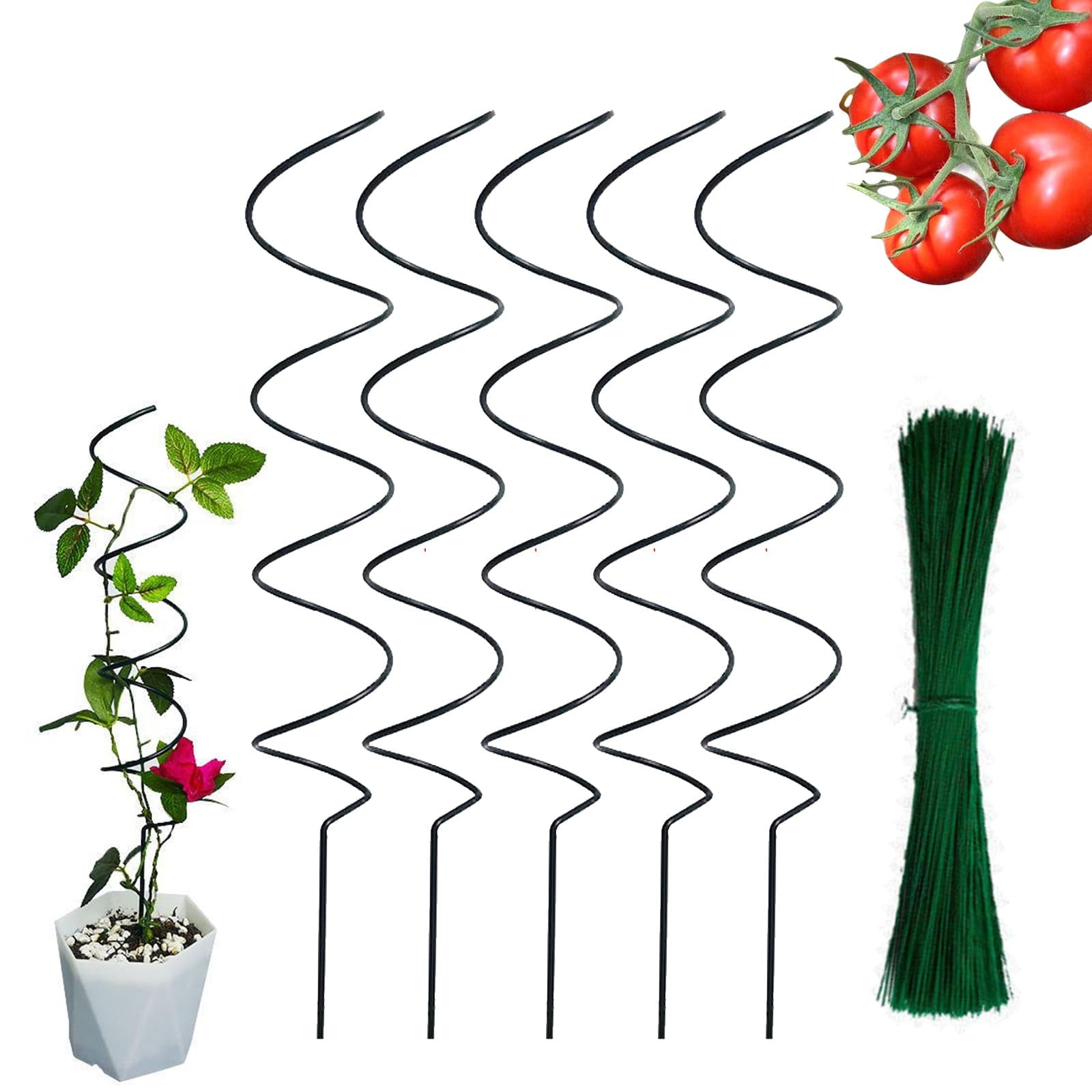
The classic wire tomato cage at garden centers is rated for determinate plants. An indeterminate tomato in a good season will tear it apart by August. The standard cage is 18 inches in diameter and 4 feet tall. You need at least 24 inches and 5 feet for most indeterminate varieties.
THREE WAYS TO SUPPORT A TOMATO PLANT
For a single plant: a heavy wire cage (made from concrete reinforcing wire, not the flimsy green ones) or a 6-foot wooden stake. For a row of plants: Florida weave, which uses a stake between every two plants and twine woven in a figure-eight pattern. It takes 10 minutes to set up and supports a row indefinitely with additional twine added as plants grow.
Water and fertilizer: consistency beats quantity
Blossom end rot is not a disease. It is a calcium deficiency caused by inconsistent watering. The plant cannot move calcium from soil to fruit when water uptake fluctuates. Spray all the calcium supplements you want — the fix is consistent moisture at the root zone.
Tomatoes want 1-2 inches of water per week. More important than the amount is the regularity. Letting a plant dry out and then soaking it triggers fruit cracking, blossom drop, and end rot. A simple drip system with a timer is the single best investment for consistent tomato production.
| Growth stage | Fertilizer focus | Frequency |
|---|---|---|
| Transplant to first flower | Balanced NPK (10-10-10) | Every 3 weeks |
| First flower to fruit set | Lower N, raise P+K (5-10-10) | Every 2 weeks |
| Fruiting season | Tomato-specific blend | Every 2 weeks |
| Late season (August) | Ease off nitrogen | Monthly or stop |
High nitrogen in the fruiting stage produces beautiful plants with almost no fruit. The plant redirects energy to foliage. Switch fertilizers when you see the first flower bud, not after fruit has set.
Pruning suckers: fewer vines, bigger tomatoes
A sucker is the shoot that grows in the axil — the junction between the main stem and a leaf branch. Left alone, it becomes a second main stem with its own suckers, which become additional stems. An unpruned indeterminate tomato becomes a sprawling 15-stem structure that shades itself and produces mostly small fruit.
A tomato plant has a fixed amount of energy per day. More stems means that energy divided more ways. Single-stem training produces fewer tomatoes and heavier ones. Two or three stems is the sweet spot for most home growers.
Pinch suckers when they are under an inch long. At that size they snap off cleanly with your fingers with no stub and no wound to speak of. Suckers larger than 2 inches should be cut with clean pruning shears, not pinched. Tearing a large sucker leaves a wound that takes weeks to heal.
Spotting disease before it spreads
Most fungal diseases on tomatoes move upward. They start on the lowest, oldest leaves where airflow is worst and humidity is highest. Check the lower third of the plant first every time you walk by. Catching a problem on the bottom leaves while the rest of the plant is healthy is entirely different from dealing with a fully infected plant.
LEAF CONDITION IDENTIFICATION CHART
Early blight (Alternaria solani) is the most common. Brown spots with yellow halos and concentric rings in the brown tissue. Treatment: remove affected leaves immediately, apply a copper-based fungicide, and improve airflow by pruning suckers.
Septoria leaf spot looks like a mass of tiny white circles with dark centers scattered across the leaf. It is spread by rain splash. Mulching heavily under plants prevents the soil-borne pathogen from reaching foliage.
Late blight (Phytophthora infestans) is what destroyed the Irish potato crop in the 1840s. On tomatoes it appears as water-soaked gray-brown patches with a pale border. It moves extremely fast in cool, wet conditions. Remove affected plants entirely and do not compost them.
When to harvest: the twist test
Tomatoes do not need to be fully red on the vine to taste good. Flavor compounds (glutamate, acids, and sugars) develop while the fruit is still attached to the plant. Color can develop off the vine. Tomatoes ripen effectively at 65-70°F indoors, and a fruit pulled at 75% of its final color will reach full flavor within 3-5 days.
The twist test: hold the fruit in your palm and give it a very slight twist. A ripe tomato releases with almost no resistance. If you have to pull, wait another day. This works better than color for varieties like Cherokee Purple or Green Zebra, which are ripe when they are still partially green.
Full-season checklist
These are the things to do in roughly the order they'll come up. Not all of them are necessary for every gardener, but all of them pay off.
- Check soil temp at 4-inch depth — wait for 60°F before planting
- Choose variety type before buying: determinate or indeterminate
- Prepare support structure before planting (not after)
- Strip lower leaves and plant deep — top third above soil
- Water well at planting, then hold for 3 days
- Set up drip system or water schedule for consistency
- Switch to low-nitrogen fertilizer at first flower bud
- Remove suckers when under 1 inch — pinch, don't pull
- Check lower leaves weekly for early disease signs
- Mulch 2-3 inches under plants once soil is warm
- Add twine or additional tie-ups as indeterminate plants climb
- Pull fruit at 75% color and ripen indoors in hot weather
- Remove all plant material at season end — don't compost diseased plants